For autumn leaves, Japan has a season stretching from September in high Hokkaido to December at selected city gardens and southern places. Northern Japan and high mountains peak earlier; lower-elevation cities farther south usually follow later. For a Tokyo or Kyoto foliage trip, compare individual gardens and temples in late November and early December rather than choosing one national peak date.
This guide uses usual peak windows from past years for individual places. They are a planning guide, not a forecast for this year. Before travelling, check the latest dated spot reports and the city-tree outlook on the PeakYet map.
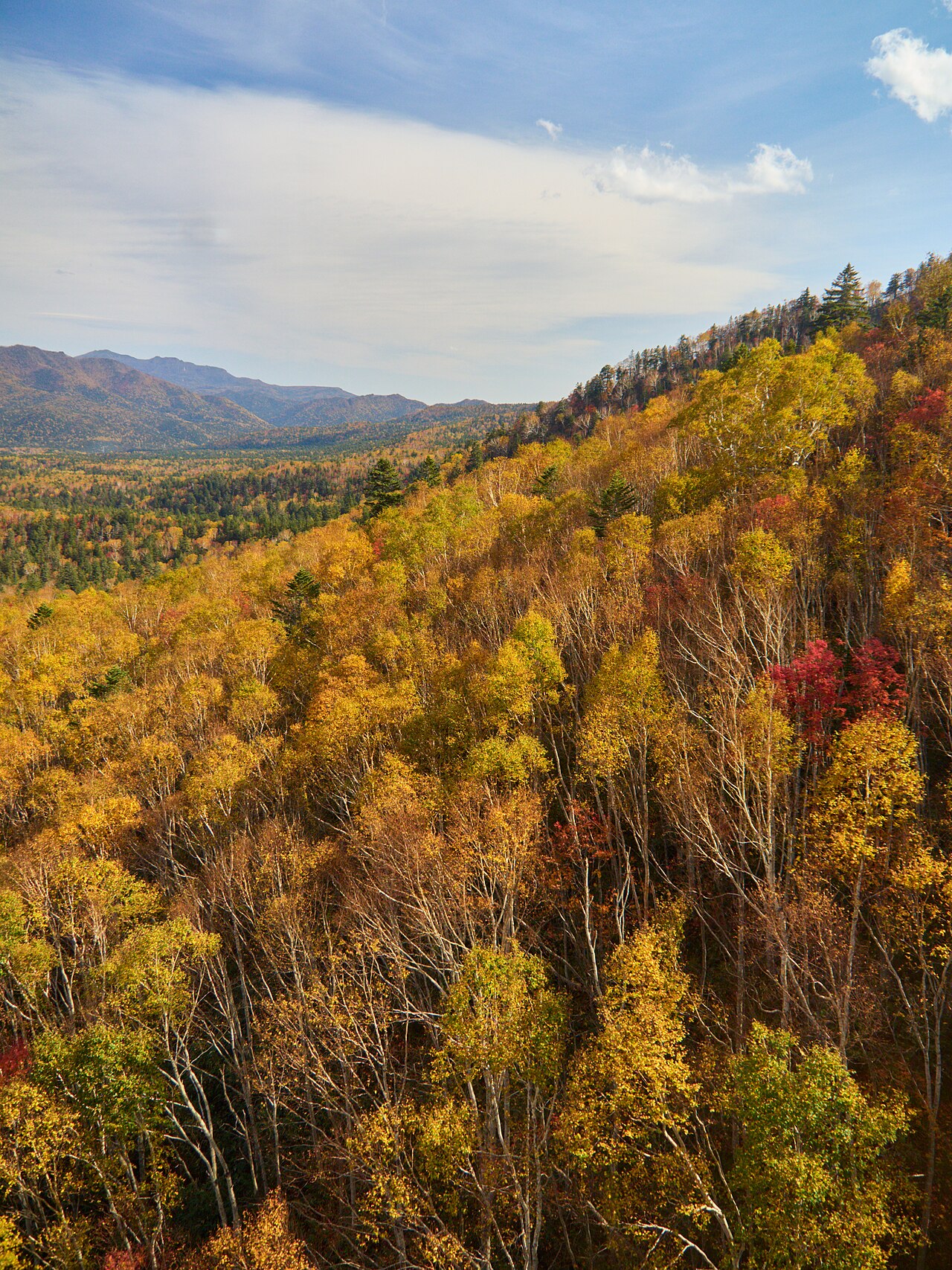
Do you mean the weather, or the leaves?
Weather and leaves answer different questions. A source-published foliage window describes when a particular place usually looks its best; it is not a temperature forecast or a promise of comfortable walking weather. Choose a region for your dates, then check the weather forecast for each destination, especially a mountain day trip.
That changes how to plan. Choose your base for the weather and the rest of your itinerary, then choose a leaf-viewing day trip or destination that fits the week. Do not assume a national foliage date says what a particular temple, lake or mountain trail will look like.
When do the autumn leaves usually peak?
November is a useful starting point for a city-based foliage trip, but September and October suit earlier mountain and northern destinations. The examples below are usual peak windows from past years in PeakYet’s saved tenki.jp data. They are not a forecast for this year, and a window for one garden should not be applied to its whole city.
| Place | Usual window | Planning use |
|---|---|---|
| Mount Kurodake, Hokkaido | September | An early mountain option; check route access separately. |
| Sounkyo Momijidani, Hokkaido | Early–mid October | A different window from nearby high mountain slopes. |
| Oirase Gorge, Aomori | Mid October–early November | A northern option that extends beyond October. |
| Kenrokuen Garden, Kanazawa | November | Compare this garden’s reports with your travel dates. |
| Tofuku-ji, Kyoto; Minoo Park, Osaka | Mid November–early December | Named places rather than city-wide peak dates. |
| Rikugien Garden, Tokyo | Late November–mid December | A late window; check dated reports before travelling. |
| Kiyomizu-dera Temple Garden, Fukuoka | Late November–early December | A southern example, distinct from Kyoto’s Kiyomizu-dera. |
Source: tenki.jp’s place pages for Kurodake, Sounkyo Momijidani, Oirase, Kenrokuen, Tofuku-ji, Minoo, Rikugien and Kiyomizu-dera in Fukuoka. These are saved usual windows (例年の見頃), not live observations. Early, mid and late month represent days 1–10, 11–20 and 21–month end in the saved data.
September and October: mountains and the north
Elevation matters even within Hokkaido. Mount Kurodake’s saved usual window is September, while Sounkyo Momijidani’s is early to mid October. Farther south, Oirase Gorge and Lake Towada have mid-October to early-November windows; Kamikochi’s extends from early October to early November. These are named-place examples, not a single date for an entire region.
Check mountain access notices as well as foliage reports before committing to a route. A usual viewing window says nothing about whether a trail, road or lift is operating on your chosen day.
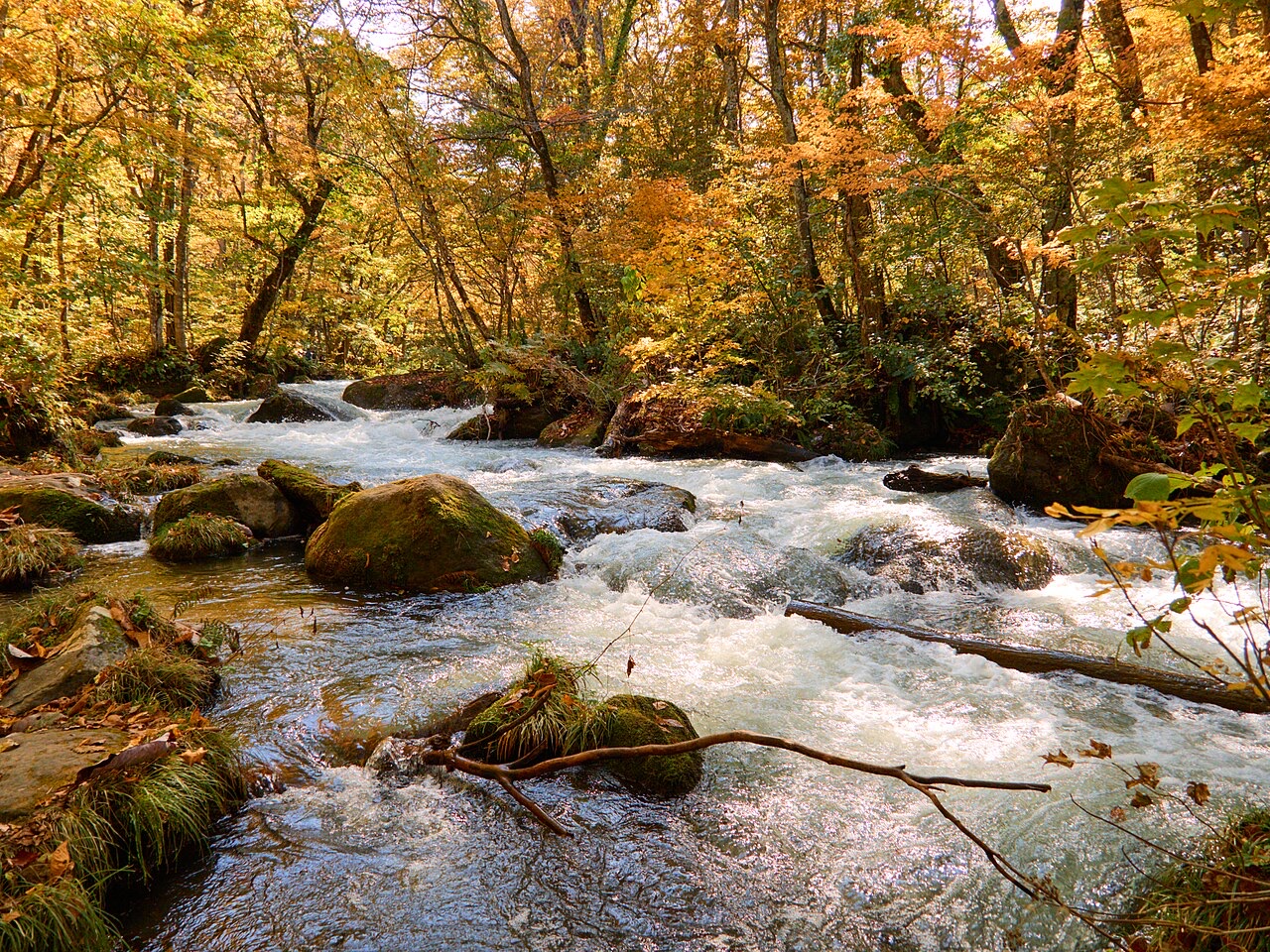
November: gardens and temples in central Japan
November brings several central and western garden windows into overlap. Kenrokuen’s saved window covers November; Tofuku-ji and Minoo Park run from mid November to early December. Kyoto’s Kiyomizu-dera runs from late November to early December. Even these Kyoto temples have different windows, so use individual place reports rather than a city-wide label.
Japan in November has weather and packing guidance. Use the season calendar to compare usual windows, then the PeakYet map to inspect dated evidence for the places you might visit.
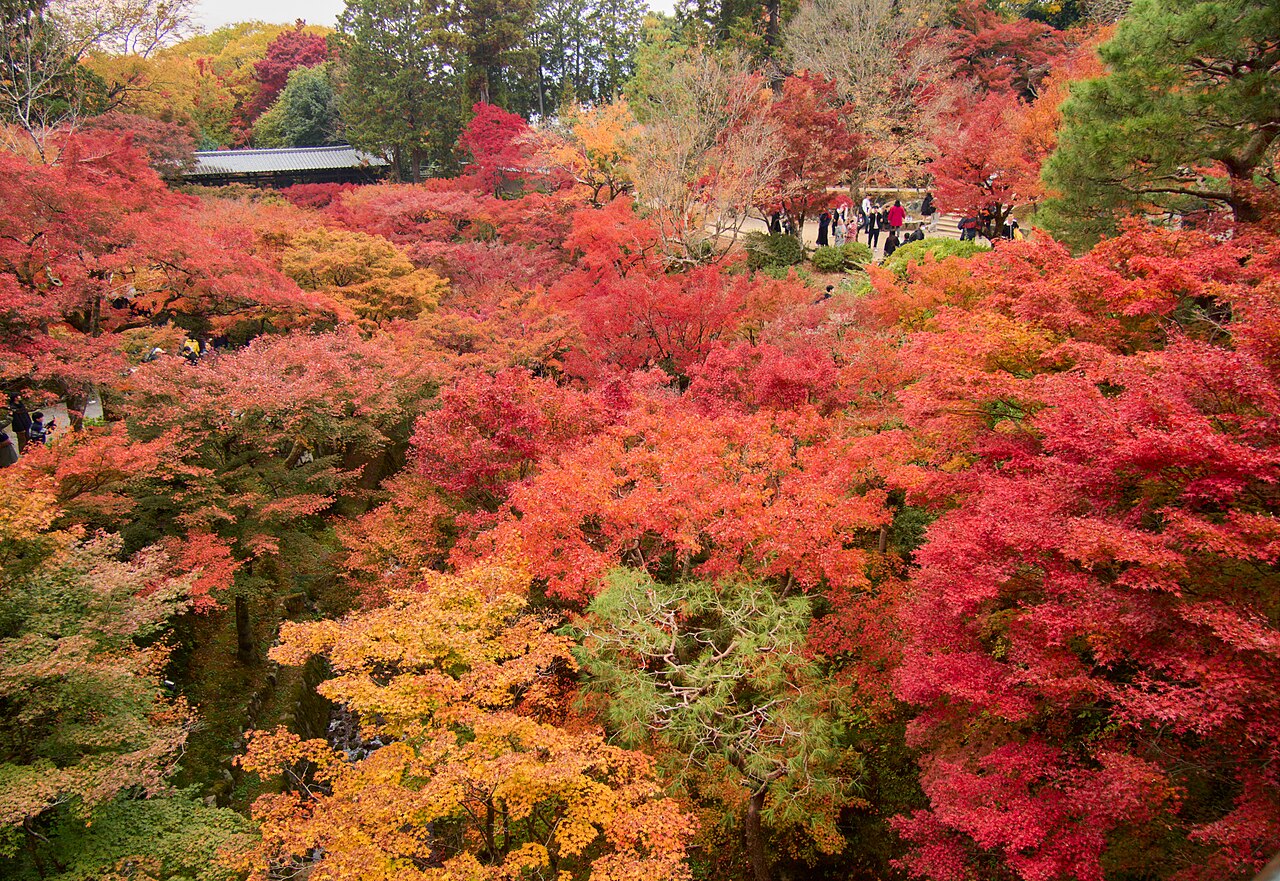
December: lower elevations and the south
December can still fit selected late windows: Tofuku-ji, Minoo Park and Kiyomizu-dera Temple Garden in Fukuoka extend into early December in the saved data, while Tokyo’s Rikugien extends into mid December. These examples do not establish a December peak for all of Kyoto, Tokyo or Kyushu.
Japan in December covers weather and late-leaves planning. Treat a usual December window as a reason to investigate a place, then check its latest dated report before choosing a day trip.
Has autumn moved later?
The saved JMA maple-colouring records show year-to-year variation, not a replacement national autumn date. Tokyo’s recorded colouring dates range from 23 November to 3 December in the 2016–2025 extract; Kyoto’s available dates range from 1 to 20 December. Those observations describe station specimen trees, not whole cities.
A small city-tree record is not a climate trend. It also cannot tell us the exact peak date for a temple or park. Use the comparison below to understand the limits of a fixed-date booking, not to choose a temple visit from the station tree alone.
| City tree | 1991–2020 normal | Earliest / latest in the recent record | What that means for a trip |
|---|---|---|---|
| Sapporo | 28 Oct | 2–11 Nov | The available dates in this extract all fall after the normal date. |
| Tokyo | 28 Nov | 23 Nov–3 Dec | A ten-day range for the station tree; gardens need their own evidence. |
| Kyoto | 5 Dec | 1–20 Dec | This is one JMA city tree, not a date for Kyoto's temples; check individual temple reports and usual windows. |
| Fukuoka | 1 Dec | 30 Nov–10 Dec | A station observation, not evidence that a southern park is at peak. |
Source: JMA maple-colouring observations, 2016–2025, compared with JMA's 1991–2020 normal dates. The table uses available observations in the saved extract; Kyoto has no 2021 value. The colouring observation concerns a specimen tree, not a park-wide peak date.
For this year, PeakYet keeps three answers separate: a dated spot report for what was seen, a historical usual window for when a spot commonly peaks, and a backtested chance for one city specimen tree. The city-tree chance is useful context; it does not predict the status of a temple, park or mountain trail.
If your dates are fixed, how should you choose?
Choose a direction that fits your week. Go north or higher for earlier colour, use central cities for late November, and look lower or farther south for the last part of the season. Choose one or two places that fit your week instead of trying to find one date that works everywhere in Japan.
- For September or October, begin with Hokkaido, Tohoku and higher-elevation places such as Nikko or Kamikochi. Add warm layers for mountain and evening stops.
- For early November, compare Oirase, Lake Towada, Kamikochi and Kenrokuen’s individual windows and reports.
- For late November, compare specific gardens and temples such as Tofuku-ji, Rikugien and Minoo Park.
- For December, compare the late windows above, then use a fresh report before fixing a day trip.
- Keep the source window and this year's evidence separate: a usual window explains past timing, while a dated report says what someone saw.
How to plan when peak dates move
Use past timing to choose a region, then use fresh reports to choose the actual day. Months ahead, choose the part of Japan whose usual windows fit your week. When you book accommodation, keep one or two leaf-viewing options in the same broad area rather than tying the whole trip to a single garden. That gives you room to react to a late or early season without changing every reservation.
Then switch from history to evidence. A usual window helps you choose a month; it cannot say what a place looks like today. A map is most useful in the final few days before a leaf-viewing day, when you can compare dated reports for the actual places you might visit. Look for who reported the stage and when. A report from a named source yesterday is a better reason to catch a train than a generic “best time” list written months earlier.
There is still no promise of peak. A dated report describes what was observed then; the view may have changed by the time you arrive. The goal is simpler: arrive in the right part of the country for your week, then make the final day-trip decision from the freshest evidence available.
- What month is autumn in Japan?
- For autumn leaves, the examples here range from September on Mount Kurodake in Hokkaido to December at selected gardens in Tokyo and western Japan. The right month depends on the place and elevation.
- When is the best time for autumn leaves in Japan?
- November is a useful starting point for a city-based foliage trip. Earlier examples include September on Mount Kurodake and mid October to early November at Oirase Gorge; later examples include late November to mid December at Rikugien. Pick the places that fit your week rather than treating the whole country as one forecast.
- Are autumn-leaves dates the same every year?
- No. The dates vary with local conditions. A usual peak window is historical context, while a current spot report or city-tree forecast addresses this season separately.
Sources
Related
Back to Japan autumn leaves 2026: live status and forecastAll articles